

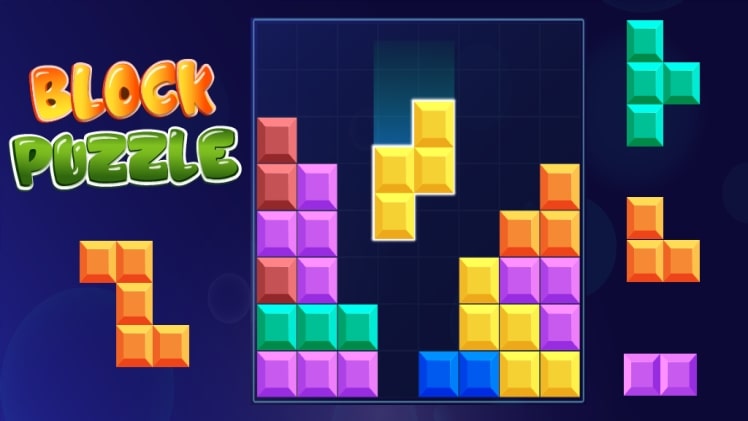
A block puzzle is a type of puzzle that involves manipulating blocks to fit them into a specific pattern or shape. These types of puzzles can come in various forms, such as wooden blocks, plastic blocks, or even virtual blocks in video games. The puzzle’s goal is to arrange the blocks in the correct configuration, often within a limited amount of space or time. Block puzzles can be challenging and require logic and problem-solving skills to complete.
What to Do to Win a Block Puzzle
Carefully examine the puzzle
Taking a moment to examine the puzzle and identify the specific pattern or shape you need to create is an important step in solving a block puzzle. This will give you a clear goal to work towards and a better understanding of what you need to do to solve the puzzle. It will also help you identify the necessary blocks and arrange them in the correct order.
Try different starting positions and orientations
Trying different starting positions and orientations can be a helpful strategy when solving a block puzzle. Sometimes rotating a block or starting with a different piece can change the dynamics of the puzzle and make it easier to solve. It can also help you discover new ways of fitting the pieces together and open up new possibilities. Additionally, starting with different pieces can give you a different perspective on the puzzle, which can be useful in finding the solution. It’s a good idea to experiment with different arrangements and orientations of the blocks to find the best approach to solving the puzzle.
Break the puzzle down into smaller sections
Breaking a block puzzle down into smaller sections can be an effective strategy when the puzzle is too difficult to solve all at once. This approach can make the puzzle more manageable, and it’s easier to focus on one section at a time. Solving one section of the puzzle can then be used as a starting point for the next section. It can also help you create a mental map of the puzzle and keep track of what you’ve done and what still needs to be done.
Additionally, it can be helpful to visualize the different sections as separate sub-puzzles. This way, you can tackle each section one by one and then put all the pieces together at the end. This can make the puzzle less overwhelming and provide a sense of accomplishment as you progress through the different sections.
Look for patterns and symmetries in the puzzle. If you can find a repeating pattern, you can use that to your advantage.
Don’t be afraid to make mistakes
Looking for patterns and symmetries in a block puzzle can be a helpful strategy when solving the puzzle. Recognizing repeating patterns in the puzzle can help you identify the correct placement of blocks and make it easier to solve the puzzle. It can also help you to figure out which blocks you need to use and where they go.
Symmetry is another useful concept to keep in mind when solving block puzzles. Many puzzles have symmetry built in, meaning certain parts of the puzzle are mirror images of each other. Identifying these symmetrical patterns can help you find the correct placement of blocks and give you an idea of the overall structure of the puzzle.
Using these techniques together can help you understand the puzzle more easily and make it more manageable to solve. Keep an open mind and be observant when searching for patterns and symmetries, as they can often be subtle and not immediately obvious.
Be patient and persistent
Being patient and persistent is crucial when solving a block puzzle. Block puzzles can be challenging and require logic and problem-solving skills, so it’s important not to get discouraged and give up too soon.
Patience means taking the time to examine the puzzle and consider different approaches rather than getting frustrated and giving up. It also means persistence in trying different methods and not giving up until you find a solution.
Key Takeaway
To play a block puzzle game, the player typically moves different shaped blocks around a game board or screen to fit them together, complete a specific pattern, or fill a certain area. The blocks can be moved by using the arrow keys or by clicking and dragging them with a mouse. The player must use strategy and problem-solving skills to fit the blocks together in the correct configuration before time runs out or before the blocks reach the top of the game board.
