

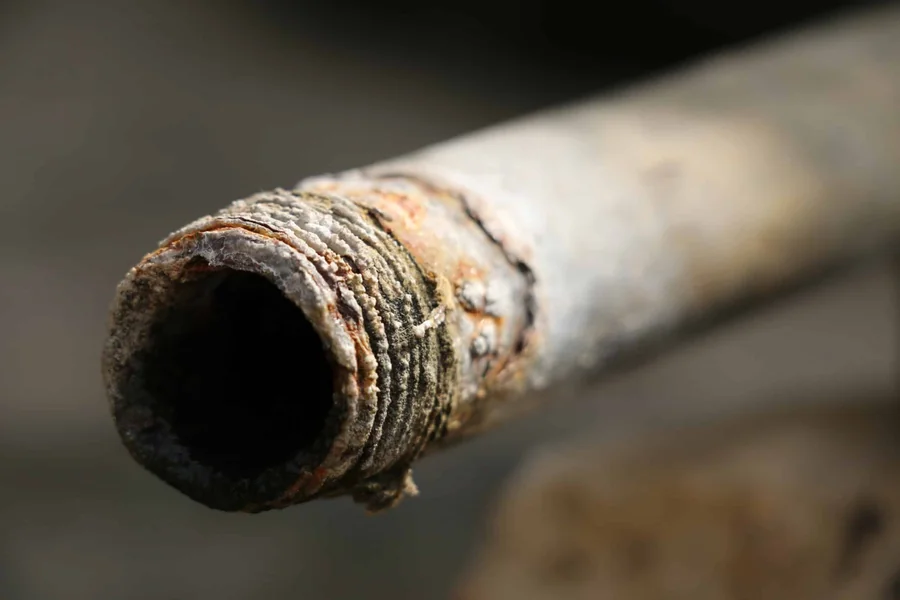
Thousands of Houston-area homes face plumbing failures as post-war construction reaches critical age
HOUSTON — A silent infrastructure crisis is unfolding inside thousands of Houston homes, where galvanized steel pipes installed during the city’s post-World War II building boom are now failing at rates that alarm plumbing professionals and insurance providers alike.
While galvanized pipes were originally expected to last 50 to 70 years, in real-world use many began corroding in less than 25 years, with most showing significant deterioration after about 40 years of service.
For Houston homeowners living in houses built between the 1950s and 1980s, that means the clock has already run out.
The Scale of the Problem
Galvanized steel piping was the standard for residential plumbing from the early 1920s through the 1960s across most of the United States. But in Houston, the use of galvanized pipes extended well beyond the national timeline.
Home builders in Houston continued using galvanized pipes for water supply plumbing in homes through the late 1980s, meaning the affected housing stock is significantly larger than in other metropolitan areas.
Professional engineering inspections reveal the service life of galvanized steel pipe in the Houston area typically ranges from 30 to 70 years, with variability depending on pipe quality, water conditions, and installation methods.
With tens of thousands of Houston-area homes now housing pipes that have exceeded their expected lifespan, the question is no longer if these systems will fail, but when.
Understanding the Corrosion Process
Galvanized pipes are steel pipes coated with a protective layer of zinc. The zinc serves as a sacrificial barrier, corroding preferentially to protect the underlying steel. But once that zinc layer depletes—an inevitable process accelerated by Houston’s water chemistry and climate—the steel underneath becomes vulnerable.
The corrosion process is insidious because it happens from the inside out.
Pipes that appear perfectly sound on the exterior may be severely compromised internally. Rust and mineral deposits accumulate on the interior walls, progressively narrowing the pipe’s diameter. This manifests as declining water pressure throughout the home, particularly at fixtures farthest from the water supply entry point.
As corrosion advances, the pipe walls thin and weaken. Eventually, the deterioration reaches a critical threshold where pinhole leaks develop, often appearing as small corrosion spots on the pipe’s exterior surface that leak intermittently before failing completely.
The Houston Factor
Several characteristics unique to Houston accelerate the failure of galvanized plumbing systems.
The city’s water quality plays a significant role. Houston’s water chemistry, with its mineral content and pH levels, interacts aggressively with aging galvanized pipes. Hard water, common throughout the region, creates scale buildup that restricts water flow while simultaneously promoting corrosion beneath the deposits.
Houston’s climate compounds the problem. High humidity levels and temperature fluctuations stress pipe materials. Hot water lines deteriorate approximately twice as fast as cold water lines, as heat accelerates the corrosion process.
The area’s expansive clay soils create additional challenges. Ground movement from soil expansion and contraction during wet and dry cycles places mechanical stress on underground supply lines, potentially accelerating failures at joints and connections.
The Hidden Health Risk
Beyond structural failure and water damage, aging galvanized pipes present a significant health concern that many homeowners don’t recognize.
Most galvanized pipes installed in the 1950s and 1960s were connected to lead service lines, and as these pipes erode, they release accumulated lead into the home’s water supply.
Even in homes where lead service lines have been replaced, the galvanized pipes themselves may have absorbed lead over decades of use. As the pipes corrode, this accumulated lead leaches back into the drinking water, creating an ongoing exposure risk particularly dangerous for children.
Water testing often reveals lead levels in homes with galvanized plumbing, even when homeowners assumed their newer service connections had eliminated the problem.
Warning Signs Homeowners Miss
Plumbing professionals report that most homeowners don’t recognize the early warning signs of galvanized pipe failure, or they dismiss symptoms as minor inconveniences rather than indicators of systemic deterioration.
Discolored water is often the most visible symptom. Rusty, brown, or yellow-tinged water—particularly noticeable first thing in the morning after water has sat in the pipes overnight—indicates active corrosion. Yet many homeowners run the tap until the water clears and assume the problem has resolved itself.
Declining water pressure represents another critical warning sign. As internal deposits narrow the pipe diameter, water flow diminishes. Homeowners frequently blame individual fixtures or the municipal water supply without recognizing that the problem originates in their own corroding pipes.
Frequent small leaks present a third red flag. Homeowners who find themselves repeatedly patching pinhole leaks are witnessing the symptom of systemic pipe failure. Each patch addresses a single weak point while the entire system continues deteriorating.
The Insurance Industry Response
The widespread failure of galvanized plumbing has caught the attention of insurance providers, who increasingly view homes with original galvanized systems as high-risk properties.
Some insurance companies now require pipe replacement before providing coverage on homes with galvanized plumbing. Others increase water damage deductibles or limit coverage amounts for properties with aging galvanized systems.
This insurance response reflects actuarial data showing elevated claims frequency and severity for water damage in homes with galvanized pipes. A single pipe burst can cause tens of thousands of dollars in damage to flooring, walls, furnishings, and structural elements.
For homeowners attempting to sell properties with galvanized plumbing, the systems increasingly function as deal-killers. Savvy buyers recognize the liability and either demand replacement before closing or negotiate significant price reductions to cover future replacement costs.
The Economics of Replacement vs. Repair
When galvanized pipes begin failing, homeowners face a critical decision: pursue incremental repairs or commit to complete replacement.
The math increasingly favors whole-home replacement.
Emergency repairs for individual pipe failures typically cost $1,000 to $1,500 per incident once drywall repair and painting are factored in. Homeowners experiencing two to three failures per year—a conservative estimate for systems in advanced stages of deterioration—can expect to spend $3,000 to $4,500 annually on emergency repairs alone.
This doesn’t account for water damage from leaks, which can easily multiply costs by a factor of ten if the failure occurs in a wall cavity, ceiling, or floor system.
A whole-home repipe in Houston typically ranges from $4,000 to $15,000 depending on home size, number of bathrooms, and material selection. While substantial, this represents a one-time investment that eliminates the ongoing cycle of failures and provides modern plumbing with a 50-year lifespan.
Modern Replacement Materials
Homeowners choosing to replace galvanized systems have several material options, each with distinct advantages.
PEX (cross-linked polyethylene) tubing has become the most popular choice for Houston whole-home repipes. The flexible material can often be installed through existing wall cavities with minimal demolition. PEX resists corrosion, handles both hot and cold water, and costs significantly less than copper while providing comparable longevity.
Copper piping remains a premium option, offering proven durability and universal acceptance by plumbing codes. However, copper installation requires more extensive wall access and carries higher material and labor costs.
CPVC (chlorinated polyvinyl chloride) provides another alternative, though its brittleness over time and susceptibility to cracking have made it less favored than PEX in recent years.
The Replacement Process
Modern whole-home repiping has evolved significantly from the disruptive, multi-week projects homeowners might imagine.
Experienced repiping contractors typically complete a standard single-family home in three to five days. The process begins with careful planning to minimize wall penetrations and disruption to the home’s aesthetics.
Technicians create strategic access points—often in closets, utility areas, and less visible locations—to run new supply lines throughout the house. Modern installation techniques allow pipes to be threaded through existing wall cavities in many cases.
All fixtures receive new connections. The old galvanized system is drained and abandoned in place or removed, depending on access and homeowner preference.
Professional crews patch access holes, though many homeowners choose to handle final painting themselves to reduce costs. Some repiping companies offer complete restoration services including drywall repair, texturing, and painting.
The Proactive Approach
Plumbing professionals universally recommend that homeowners in houses built before 1990 have their systems inspected if original galvanized piping remains.
A professional inspection can assess pipe condition, identify areas of advanced corrosion, and provide guidance on replacement timing. Some deterioration indicators require professional evaluation, as they’re not visible to homeowners during normal use.
For homeowners whose galvanized systems haven’t yet begun showing failure symptoms, proactive replacement offers significant advantages over reactive emergency replacement. Planned projects allow homeowners to control timing, budget appropriately, and avoid the stress and damage associated with unexpected failures.
Looking Forward
As Houston’s housing stock continues aging, the galvanized pipe replacement wave will continue accelerating. What was once a niche service performed by specialty contractors has become routine work for plumbing companies throughout the metropolitan area.
For the thousands of Houston homeowners still living with galvanized plumbing installed during the city’s mid-century growth period, the message from professionals is clear: these systems are living on borrowed time.
The question isn’t whether replacement will be necessary, but whether homeowners will address the issue proactively on their own terms, or reactively at 2 AM when a pipe bursts and water floods through their home.
The infrastructure installed to serve Houston’s post-war expansion has served admirably for decades. But that service life has reached its end. The next chapter in these homes’ plumbing systems is just beginning.
Homeowners concerned about aging galvanized plumbing are encouraged to schedule professional inspections and obtain replacement estimates before emergency situations develop.
