

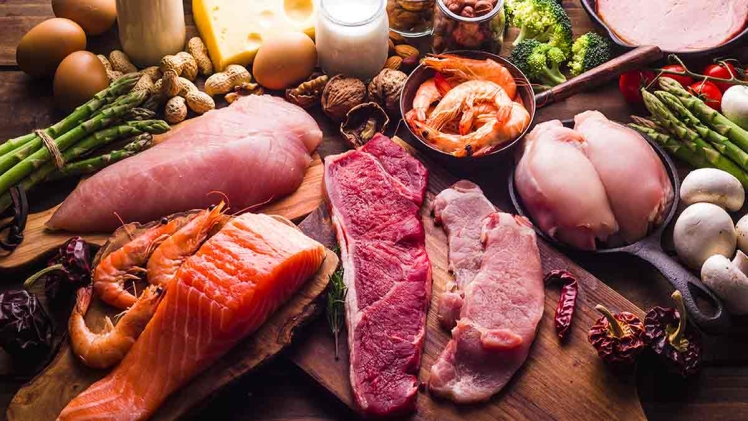
Protein is an elementary building block of all living organisms. The average human body consists of 7 to 13 kg of protein, depending on age. They take on a variety of functions, e.g. Building materials for cells and tissues, enzymes, hormones, antibodies, coagulation factors and transport substances for nutrients. Dietary proteins can also provide energy: 1 g of protein provides 4 kcal.
Body cells are constantly renewed. They are therefore dependent on a regular supply of protein. It’s not just about the amount, but also the quality of the protein. The human body needs 20 amino acids for protein synthesis. They are divided into dispensable and indispensable amino acids.
Based on new scientific data, SEP World has revised the reference values for protein per day. “What’s new is that the average requirement for essential amino acids is given. Strictly speaking, there is only a physiological need for nitrogen and the nine essential amino acids. Since the body cannot produce them itself, they have to be supplied regularly with food,” says Prof. Dr. Peter Stehle, member of the Scientific Executive Committee of the DGE, at the press conference to present the updated reference values.
The recommended intake for protein is 0.8 g protein/kg body weight per day for adults aged 19 and under 65 years. For adults over the age of 65, for the first time the DGE gives an estimated value for an appropriate intake of 1.0 g/kg body weight per day. The updated reference value tables for all age groups as well as “Questions and answers on protein and essential amino acids” are available free of charge on the Internet.
Why is there an estimated value for adults aged 65 and over?
For adults aged 19 to under 65, protein requirements are determined using data from nitrogen balance studies. Physical functionality and functional maintenance are of central importance for older people. For this reason, in addition to the results of nitrogen balance analyses, results of muscle protein synthesis and functionality are taken into account for adults over 65 years of age to derive the reference value for protein intake. The study results available so far do not allow the derivation of the protein requirement for adults over 65 years of age with sufficient accuracy, so that no recommended intake can be derived. Therefore, an estimated value for an appropriate intake is given for this age group in the revised reference values. This is 1.0 g/kg body weight/day for women and men over the age of 65.
How can the reference values for protein intake be achieved?
The recommended protein intake of 0.8 g/kg body weight per day for adults corresponds to an intake of 57 to 67 g protein per day based on the reference weight. This amount can be reached by eating protein-rich foods. Plant-based foods include legumes such as soy, lentils and peas. Cereal products such as bread also contribute to the supply of protein. Protein-rich animal foods such as meat, fish, dairy products and eggs supplement the intake.
Does protein intake have preventive effects on weight?
Higher protein intake is associated with greater satiety and thereby greater weight loss in a diet compared to lower protein intake. According to various studies, a short-term diet of 3 to 6 months with a high protein intake (compared to a low protein intake) leads to greater weight loss. With increasing duration of a protein-rich diet, the effect becomes smaller or disappears completely. Further investigations are needed on this connection.
The DGE has summarized these and other“ Practical questions and answers about protein and essential amino acids” and “Selected questions and answers about the reference values for nutrient intake in general ” in an FAQ paper. They can be accessed free of charge on the Internet and explain, among other things, also what has changed, how the values were derived, how the population is supplied with protein and what the consequences are of too little and too much protein.
